If you’re considering Invisalign in The Woodlands, you probably have questions. It’s a big decision, and clear, honest answers matter. At Creekside Park Family & Cosmetic Dentistry, Dr. Christopher Anton and Dr. Angela Anton will guide you through every step, from your first consultation to your final smile.
Both doctors are Fellows of the American Academy of Clear Aligners, and both serve as Board Directors and Key Opinion Leaders for the organization. That means they don’t just provide Invisalign. They help teach other dentists across the country how to do it well.
This page answers the most common questions we hear about Invisalign. We want you to feel fully informed and confident in your decision to pursue a straighter, healthier smile.
The Invisalign Process
What is Invisalign and how does it work?
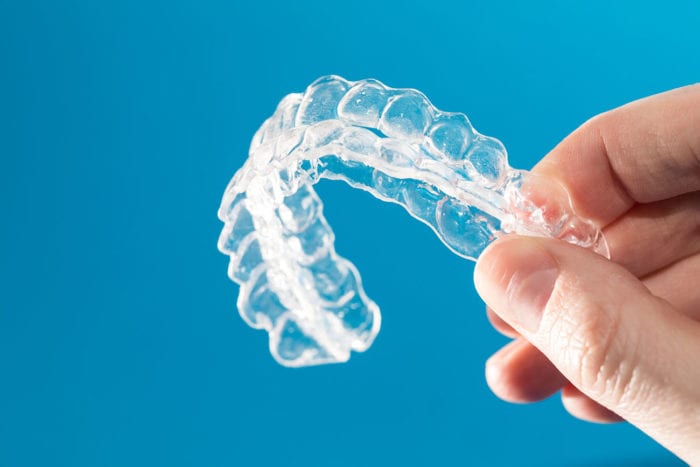
Invisalign is a modern orthodontic treatment that uses a series of clear, custom-made aligners to gradually straighten your teeth. Unlike traditional braces, there are no brackets or wires. You wear each set of aligners for about one to two weeks. Every set applies gentle pressure to specific teeth, moving them incrementally into position over the course of your treatment.
Because the aligners are removable, you take them out to eat, brush, and floss. Most patients wear them 20-22 hours a day.
What happens during the initial consultation?
Your journey begins with a comprehensive consultation with Dr. Chris or Dr. Angela. They’ll evaluate your oral health and discuss your smile goals. Using advanced digital scanning technology, we’ll create a precise 3D model of your teeth. That model becomes the foundation for a personalized treatment plan that maps out your entire smile transformation before you even start.
You’ll see what your smile could look like at the end, and you’ll have time to ask questions before committing.
How long does Invisalign treatment typically take?
Treatment length depends on your case’s complexity. For many adults, treatment ranges from 6 to 15 months. Some patients with minor alignment issues finish sooner. More complex cases may take longer.
During your consultation, we’ll give you a realistic estimate based on your specific situation. There’s no guessing.
What are refinements, and why might I need them?
Refinements are additional aligners used at the end of your initial treatment to fine-tune your teeth’s final position. We often factor them into your estimated treatment time from the start. Finishing your first set of aligners is exciting, but many patients need refinements to achieve ideal results.
This is a normal part of the process. It’s not a setback. It’s how we ensure your smile is straight and stable.
How do I know if I’m a good candidate for Invisalign?
Invisalign is highly versatile and treats a wide range of issues, including crooked teeth, gaps, overbites, underbites, crossbites, and crowding. The best way to know if it’s right for you is to schedule a consultation.
Dr. Chris or Dr. Angela will assess your needs and confirm whether Invisalign is right for your case. If it isn’t, they’ll tell you what is.
The Patient Experience
Does Invisalign hurt?
You may feel some mild soreness or pressure when you start a new set of aligners. That’s a good sign. It means the aligners are doing their job. The discomfort usually fades within a few days.
Many patients describe it as a dull ache or pressure rather than sharp pain. Over-the-counter pain relievers can help if you need them.
What are attachments, and will I need them?
Attachments are small, tooth-colored bumps bonded to your teeth to help the aligners grip more effectively. They allow more complex, precise tooth movements that wouldn’t otherwise be possible.
While they’re designed to blend in, they can make your aligners slightly more noticeable. They’re also critical to achieving the best results and far less visible than traditional braces.
Will Invisalign affect my speech?
You may notice a slight change in your speech when you first start wearing aligners. This is most common with “s,” “sh,” or “z” sounds. It’s a temporary adjustment as your mouth and tongue get used to the aligners.
Practicing speaking, reading aloud, or singing can help you adapt faster. Any lisp or change in speech typically resolves within a few days to a week.
What should I do if I lose or break an aligner?
If you lose or break an aligner, call our office right away. Don’t try to fix it yourself, and don’t skip ahead to the next set in your series. Dr. Chris or Dr. Angela will advise you on the best next steps.
Depending on the situation, we may recommend wearing your previous set of aligners or ordering a replacement. That may temporarily pause your treatment, but it’s the safest approach.
Is Invisalign really invisible?
Invisalign is significantly less noticeable than traditional braces, but it’s not completely invisible, especially if you have attachments. The aligners are made of a clear, smooth plastic that’s discreet and barely noticeable from a distance.
Most patients find the trade-off for a more comfortable, flexible treatment is well worth it.
Suitability and Treatment
Can Invisalign fix complex bite problems?
Yes. Invisalign effectively treats a wide range of issues, including overbites, underbites, crossbites, and open bites. The system addresses many of the same orthodontic concerns as traditional braces.
That said, the best way to know if your specific case is suitable is to have Dr. Chris or Dr. Angela evaluate your needs. They’ll be honest with you about whether Invisalign is the right fit.
Are there age limits for Invisalign treatment?
Invisalign works for both teens and adults. There’s no upper age limit. Many adults in their 30s, 40s, and beyond choose Invisalign to correct shifting teeth or bite issues.
Adult treatment sometimes requires more careful planning and may take longer, since bone remodeling slows with age. A comprehensive evaluation will tell us the best approach for your situation.
Can I get Invisalign if I’ve had braces before?
Absolutely. Many of our Invisalign patients had braces as teens and are now dealing with orthodontic relapse, which is when teeth shift back over time. Invisalign is an excellent solution.
It’s also a good option if you had braces but didn’t wear your retainer as consistently as you should have. No judgment. We’ll help you get back on track.
What if I have a crown, bridge, or implant?
Invisalign can usually work around existing restorations, but we need to account for them in the treatment plan. Crowns and implants don’t move like natural teeth, so we plan the aligner sequence carefully.
During your consultation, we’ll evaluate your restorations and let you know if the plan needs any adjustments.